Political science is the study of constitutions, law, and government, at the local, national, and international levels, and of those things that influence the exercise of political power, such as individual interests and attitudes, norms, institutions, and culture.
On Tuesday, October 6, the annual TXST Law School Fair was held from 3:00-6:30 in the LBJ Student Center Ballroom. Approximately 250 students attended the event, which was organized by Career Services and the university’s official Pre-Law Advisor, Dr. Ward.
The event allowed students to network with representatives from law schools across the country in order to gain insights on improving applications, admissions requirements, and the paths from which students might transition to law school.
For more information about the Pre-Law program at Texas State, visit the Pre-Law guide page here or contact Dr. Ken Ward at kw12@txstate.edu.
Earlier this September, members of SWIPS (Supporting Women in Political Science) attended the Texas Tribune festival. Participants had the opportunity to hear from legal scholars, policymakers, journalists, and advocates about some of the most important issues facing our country today. Participants attended several panels, including “The Promise of the Constitution,” “How Should We Regulate AI?” “After Roe in Texas,” and “Melissa Murray on How to Understand the Constitution.”
Annise Adams, a student of Political Science and a member of SWIPS, stated the following –
“One of my biggest takeaways from the Texas Tribune Festival was realizing just how much there is to learn beyond the classroom. Hearing people who study, debate, and help shape the laws and policies we discuss in our courses was an incredible experience. It reminded me why I love studying political science and made me even more excited about pursuing law school after graduation.”
SWIPS is a nonpartisan women’s organization at Texas State University. This professional education and development organization is dedicated to helping political science majors and other students explore the various aspects of political science, enabling them to pursue their professional and academic interests. SWIPS meets every other Tuesday at 6:00PM in THH 406.
If you’d like to learn more information about this organization, please contact SWIPS President Ihechi Diribe at tbd50@txstate.edu.
On September 26, Nick James, a 2021 alumni of the Department of Political Science, was a featured panelist at the annual Texas Tribune festival in Austin as the director of government affairs of the Cicero Institute. He appeared on a panel titled: “Free Markets, Free Ideas: Austin and Heterodox Thinking.” The panel highlighted new institutions such as the Cicero Institute and the University of Texas at Austin that are bringing diversity to Austin’s political culture.
Nick James is a native Austinite with over a decade of experience in Texas politics and policy. As director of government affairs for the Cicero Institute, he advances policy reforms focused on public safety, technology and healthcare. He has previously worked for Lt. Gov. Dan Patrick, two state senators, multiple political campaigns and the Texas Conservative Coalition Research Institute.
On September 26, over 60 faculty and staff and their families, including faculty from the Department of Political Science such as Drs. Faber, Langford, Bagnulo, DeSoto, and Rishi, attended the First Annual College of Liberal Arts Picnic at the University Camp to enjoy bouncy houses, face painting, river swimming, cornhole, pulled pork, and companionship. There was also a kickball tournament that was as fun for spectators as it was for the participants. The combined WLL and Philosophy team narrowly beat out the Sociologists, and the History, Political Science, English, and Dean’s Office team surprised the Psychologists with an upset win!
The Department of Political Science extends a warm thanks to those that made the picnic possible, including that of Megan Rogers, John Agnulo, Mike Whitehawk, Kelly Mosel-Talavera, Shannon Shaw, Mark Hernandez, Nabila Cook, and Justin Cantu.
Dr. Langford, an attendee of the picnic, stated “My family and I had a wonderful time spending time outdoors at the Texas State University Camp with other members of the COLA faculty. The bounce house and face painting were particular favorites for my daughters.”
The Department of Political Science looks forward to attending future COLA picnics and encourages all faculty to participate next year!
On September 28, Professors Levy and Bagnulo presented a lecture in Texas State University’s Department of Philosophy titled “Who Says? Observations on the law and morality of deepfake victim impact statements”. The presentation centered around the precedent of AI deepfakes as acceptable mediums for victim impact statements of the deceased. In an Arizona court case, AI was utilized depicting a recently deceased victim of a road rage incident in a victim impact statement, a form of account that details the financial, emotional, and physical harms suffered by a victim of a crime to a sentencing authority. The presiding judge of the case, accepted the use of AI, generating further discussion into the developing world of responsible AI use in terms of ethics and morality.
Professors Levy and Bagnulo explore this paradigm with participants of the lecture through gleaning insights from Texan and Federal legal principles that might delineate the validity of AI generated deepfakes. Finally, they expounded on how this case set a precedent for the future of political communication and narrative construction in relation to AI’s incapacity to conduct moral reasoning and understanding.
Professor David A. Levy is an Assistant Professor of Instruction in the Graduate Legal Studies program at Texas State University. His undergraduate degree is in music from Texas Wesleyan College, and he holds a J.D. degree from Southern Methodist University and an LL.M. (with distinction) in International and Comparative Law from the Georgetown University Law Center. He has published in the area of artificial intelligence and legal ethics, as well as comparative law and international commercial law harmonization. Professor Levy has significant work experience in the field of law, including working for the United Nations Commission on International Trade Law, the American Society of International Law, and the International Law Institute. Professor Levy has also held elected office as the County Attorney of Archer County, Texas as well as having served as Mayor of Archer City.
Dr. Vince Bagnulo has taught at Texas State for five years and is a Lecturer in the Political Science Department. He has a Ph.D. in Political Science from the University of Notre Dame, as well as a Masters degree in Philosophy from the University of Oxford and undergraduate degrees in Physics and Philosophy from the University of Winnipeg. He primarily teaches introductory American government courses, though he is also in the Honors College. His research specialization is political theory, specifically 19th century political thought. The focus of his research is the importance of character and citizenship for democratic politics.
On September 24, nearly 400 students, faculty and staff attended Discourse in Democracy’s annual “Constitution Day Lecture.” This year’s speaker, Dr. Michael Zuckert, a distinguished visiting professor at the University of Texas School of Civic Leadership, presented a lecture on “The Declaration of Independence and the Rule of Law”. The lecture explored how the Declaration of Independence supported separation from Britain; however, this was done not as a rejection of rule of law but out of a deeper commitment to rule of law.
The next day, Dr. Zuckert hosted a seminar for 20 students and faculty members that addressed the conflicting nature of Thomas Jefferson’s political activity as explored through the Declaration of Independence in contrast to his relationship to that of slavery.
Dr. Zuckert is the Distinguished Visiting Professor at the University of Texas School of Civic Leadership during the 2026-2027 academic year. Formerly, he was at the University of Notre Dame where he is Nancy R. Dreux Professor of Political Science, Emeritus. His major scholarly work has been in the areas of early modern political philosophy, American constitutional law and history, and American political thought. He was the founding editor of the journal American Political Thought. He has written extensively on Thomas Jefferson and James Madison.
Constitution Day and Citizenship Day is an American federal observance commemorating the signing of the United States Constitution in 1787 and recognizing those who have become United States citizens by coming of age or through naturalization.
The Department of Political Science houses two academic journals, an international mediation newsletter, and two program magazines - Political Science's Alumni NewsWire and Public Administration's Public Matters.
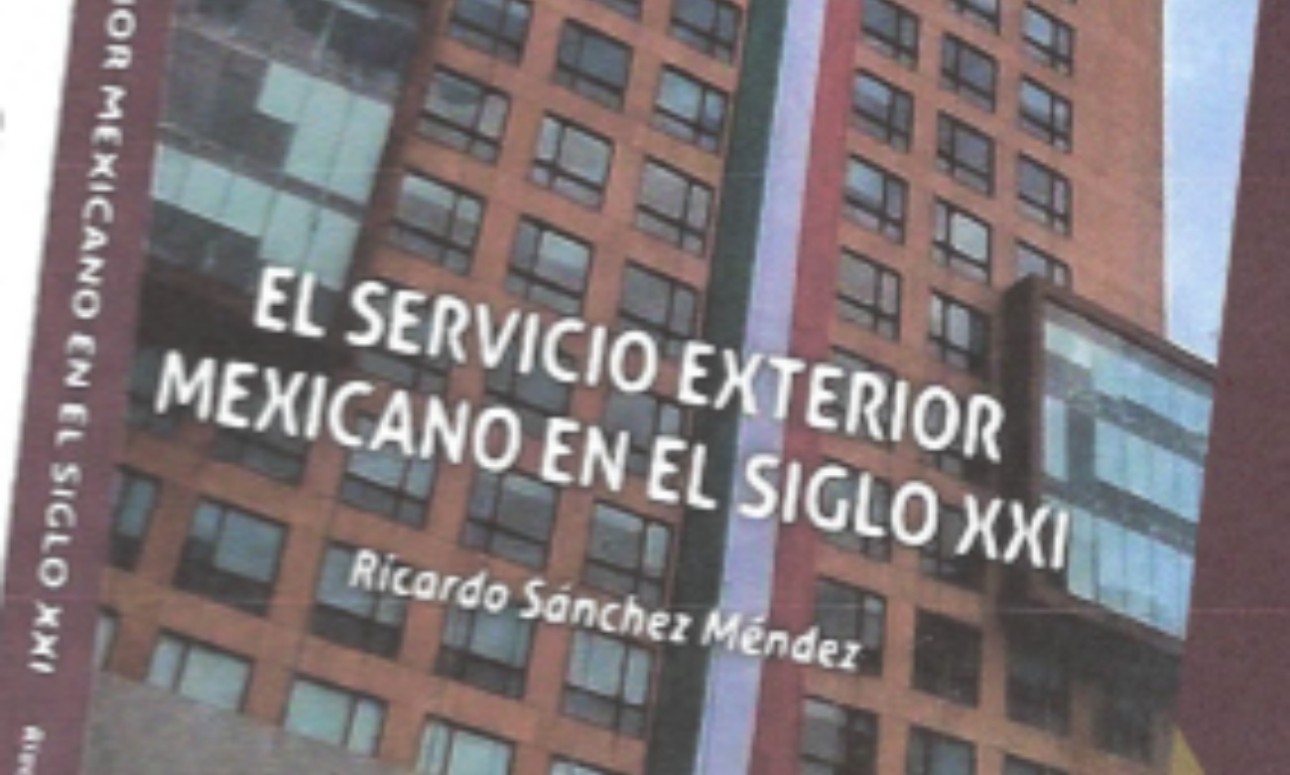
The Center for International Studies, the Political Science Department, and the Texas State University's William P. Hobby Center for Public Service and the CENTEX Chapter of the American Society for Public Administration (ASPA) are announcing an in-person Book Talk by Dr. Ricardo Sanchez Mendez.
Thursday, October 29, 2026
4:30pm- 5:30pm
Trauth Huffman Hall (THH)- Room 308 (third floor)
The Hobby Center will provide free refreshments, snack, and cold drinks beginning at 4:00pm.
Dr. Sánchez Mendez will explore the fundamental objectives of his text in his talk. A primary objective is to explain the historical and political development of the Mexican Foreign Service since its inception, as well as that of the career civil service. His book and his presentation analyze the national and international legal frameworks governing the Mexican Foreign Service (SEM) and reviews public administration performance evaluation systems, emphasizing the importance of performance assessments and promotion competitions. A secondary objective is to present a series of proposals and recommendations that, from an academic and non-partisan perspective, seek to improve, continuously professionalize, and institutionally strengthen both the career SEM and the Mexican Foreign Ministry. The aim is for these insights to be considered in the academic training of international relations students—including those aspiring to join the Mexican Foreign Service (SEM)—and by those responsible for formulating Mexico’s foreign policy.
Dr. Ricardo Sánchez Méndez is a Mexican diplomat, academic, author, and specialist in international relations, Mexican foreign policy, diplomacy, and public administration. He served for 35 years as a career diplomat in the Mexican Foreign Service, retiring with the rank of Minister. He has taught at UNAM’s FES Acatlán and ENEP Aragón, as well as at the Universidad del Valle de México, where he also served as academic coordinator of the International Relations program. He currently serves as a lecturer in Political Science at Texas State University. His scholarly interests include Mexican foreign policy, international relations, diplomacy, public administration, and the geopolitics of the Asia-Pacific region. His publications include works on Mexico’s relations with Indonesia and the Asia-Pacific, Mexican foreign policy, and international economic relations. He is the author of the book El Servicio Exterior Mexicano en el siglo XXI, published by Tirant Lo Blanch, which examines the challenges and evolution of Mexico’s Foreign Service in the 21st century.